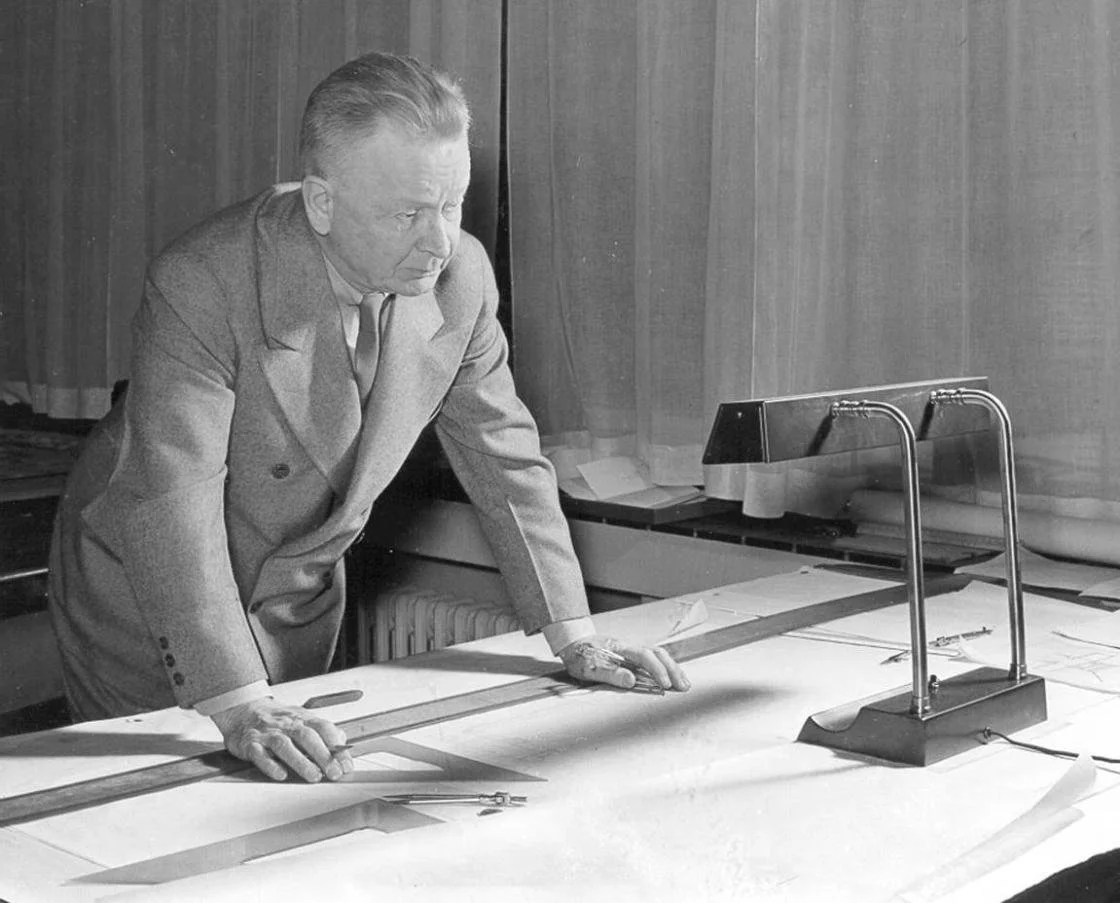
Eliel Saarinen
Eliel Saarinen (1873–1950)
Eliel Saarinen was a Finnish architect and urban planner who rose to international prominence in the early 20th century. He studied architecture at the Polyteknillinen opisto in Helsinki and co-founded the well-known architectural firm Gesellius, Lindgren & Saarinen together with Herman Gesellius and Armas Lindgren.
The firm designed, among other works, the National Romantic studio home Hvitträsk, the Finnish Pavilion at the 1900 Paris World Exposition, and several other significant buildings.
Saarinen’s most famous work in Finland is the Helsingin päärautatieasema, completed in 1919, which remains one of the most recognizable buildings in Helsinki and in all of Finland. He was also an influential urban planner and prepared city plans for both Helsinki and Tallinn.
From 1923 onward, Saarinen worked mainly in the United States, where he had a strong impact on modern architecture and urban design. His work and teaching at the Cranbrook Academy of Art inspired an entire new generation of architects, including his own son, Eero Saarinen.
Eliel Saarinen’s importance to Finland is considerable: he laid the foundation for the international recognition of Finnish architecture and left a lasting mark on both the urban landscape and the nation’s cultural identity.